

Social Democracy

Updated: Feb 13

Social Democracy, also referred to as “Nordic Capitalism,” is a large reformist labor movement that emerged in Germany in 1868. I describe it as “Human Capitalism” or “Modern Capitalism.”
Social democracy represents a compromise between socialism and capitalism. It is a third path between the traditional political left and right. Its goal is to reform and tame capitalism so that it serves the people. Social democracy (or Nordic capitalism) should not be confused with “democratic socialism,” which is a democratic form of socialism and is fundamentally opposed to capitalism itself.
The Main Policy of Social Democracy: Redistribution of Wealth
One of the central policies of social democracy is the redistribution of wealth through a fair and progressive tax system. In such a system, individuals and legal entities with higher incomes pay higher taxes. These tax revenues are then used to reduce poverty and abnormal inequality by supporting individuals and sectors of society that need financial assistance.
This redistribution policy, which transfers resources from the more affluent to those in need, acts as a kind of “vaccination” for society against the excessive dominance of money and capital. It ensures that human and humanitarian values take priority over the worship of wealth.
Tax as a Premium for Public Insurance
In a social democratic system, taxes function like insurance premiums paid to a public, universal system backed by the government. Citizens who pay fair taxes are, in effect, insuring themselves first, then their loved ones, and ultimately their entire community.
Through this collective insurance, individuals and society are protected from severe economic fluctuations. The system provides stability and security for all.
Private Property and the Limits of Capital
Social democracy respects private ownership, but it does not consider capital accumulation to be limitless. It rejects the idea of a “direct diagram,” where more capital always produces more profit at the same constant rate and can theoretically grow to infinity.
Instead, capital growth is better represented by a “sinusoidal diagram.” In this model, profitability rises only within a certain reasonable range. Beyond that range, progressive taxation moderates excessive accumulation.
The justification for progressive taxation lies in the collective nature of society. Capital gains are not created in isolation; they are made possible by the participation and contributions of the broader community. Small contributions from many members of society accumulate into large overall profits. Therefore, it is logical and fair that those who benefit most from this collective system contribute proportionally back to it. This prevents abnormal inequalities that could corrupt and ultimately destroy society.
Tax as a Tool of Regulation
Taxation is a regulatory tool. Through progressive taxes and redistribution, the power and influence of capital are balanced within society. This approach is visible in Nordic countries, which are known for high-quality and widespread welfare systems, comprehensive development, and strong, internationally respected democracies.
The well-being of citizens and job creation should not rely on traditional charity, which depends on personal preferences and limited resources. Instead, social welfare should be a stable, secure, and modern governmental responsibility. This approach also preserves the dignity of individuals.
A minimum standard of governmental welfare—such as that found in Nordic countries like Sweden—ensures that everyone, in any condition, enjoys economic security. This prevents the distortions caused by excessive money power, as seen in societies governed by older forms of capitalism, including countries such as Iran and, to some extent, the United States.
The Nordic model addresses the roots of abnormal inequality, severe poverty, and the widespread criminality that often accompanies them. In these countries, government functions as an extension of the people, serving them rather than dominating them as an authoritarian and often corrupt master.
Strengthening the Role of Employees
Another core policy of social democracy is strengthening employees’ influence in working life, particularly regarding fair and reasonable wages. This is achieved by protecting the right to strike and strengthening labor organizations.
When citizens are freed from anxiety about their basic material needs—within a progressive and dynamic economy that guarantees security and shared interests—they gain the opportunity to focus on human development. In this context, what I call “The Iranic humanism” can flourish beyond individual beliefs.
Citizens who directly experience the benefits of such a system are more motivated to contribute to their own development, the well-being of their loved ones, and the advancement of society. This represents the beginning of a new era of civilization: an era of “Practical Equality” and the expansion of “The Iranic Humanism.”
Explanation of the direct diagram:
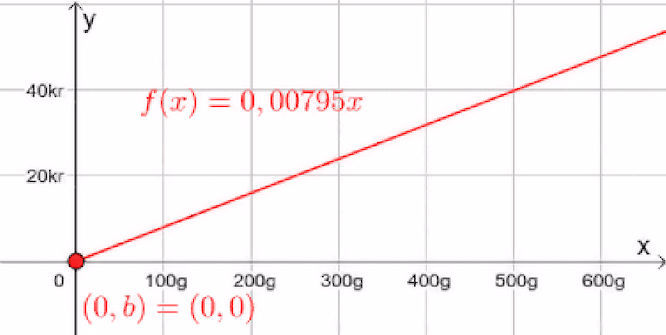
In a direct diagram, as we move from left to right, the graph continues to rise indefinitely. In theory, it can increase toward infinity.
This resembles very high incomes in the absence of progressive taxation. Without limits, income continues to grow unchecked—like snow accumulating on the widest roof.
In societies with “old” or primitive capitalism, where modern tax systems are absent, capital and the favoritism that accompanies it tend to become concentrated in the hands of a few.
In such a “jungle economy,” millions of people struggle intensely for basic needs, often accepting harsh conditions. Many remain trapped in deprivation, ignorance, debt, and backwardness so that a small group can accumulate great wealth.
This produces extreme inequality, widespread corruption, and high levels of crime. Money becomes the central value of society, replacing higher human principles.
Explanation of the sine diagrams:

In a sinusoidal diagram, as we move from left to right, growth does not continue endlessly upward. Instead, the curve eventually flattens and then declines.
Progressive taxation works in a similar way. When income reaches excessively high levels, higher tax rates limit further accumulation. If income rises again, taxes also increase, reducing the net gain.
As a result, extreme wealth accumulation becomes less attractive. This creates regulation and balance. The taxes collected are redistributed to individuals and businesses in need, providing economic insurance for society as a whole.
If a wealthy company or individual later faces bankruptcy or economic stagnation, they too benefit from the same social protection system.
A healthy, prosperous, and insured society provides security and encouragement for all. What is restrained is not success itself, but bullying, corruption, and the unlimited dominance of capital.
Some critics of social democracy may fear that controlling high incomes is like planting a tree only to uproot it once it bears fruit. However, the intention is not to destroy the tree. Rather, it is to harvest part of the fruit so that the branches do not break under excessive weight. If pests attack the tree, the resources gained from the fruit can be used to protect and preserve it.
Taxation is not a pest. It is a tool to regulate and manage the weight of society’s “fruits.” It protects enterprises and individuals from destruction during inevitable market fluctuations.
Without such regulation, abnormal inequality damages society. Crime and corruption increase, human values decline, and power becomes concentrated in the hands of the wealthy and the strong. Society risks turning into a jungle dominated by capital.
Modern progressive taxation prevents this uncontrolled disintegration. By regulating markets and capital, it contains destructive forces and preserves a humane and balanced social order.
A Note:
In Sweden, which has a social democratic structure, the aim of tax policies is to focus more on incomes such as the large incomes of industrial plant owners. It should also be noted that according to statistics, in Sweden, more than eightytwo percent of the total tax paid by a Swedish citizen during her/his lifetime is reimbursed in the form of services and allowances.
For more information on Swedish taxation, please refer to the article "I’m an American living in Sweden. Here’s why I came to embrace the higher taxes." by Tom Heberlein, Professor of Sociology at the University of Wisconsin and Visiting Professor at the Swedish University of Agriculture. In his article, for example, he acknowledges:
On average, a Swede pays 22% of his or her income tax. Exactly the same amount that Betty and I paid about American (state and federal) income tax. Critical Americans claim that Swedes pay 56% - that way, the government takes more than half of your money before you spend it.
This is not the case: 56% of the tax rate is called the marginaltax, which means that high-income people, when their income exceeds a certain amount (currently SEK 615,000 per year), have a higher amount of tax [only] on the part of their income that Excess on the ceiling is set to pay. But the amount that is set below the ceiling is always subject to about 30% tax. Only 15% of all Swedes pay that higher tax. Our total Swedish income tax amounted to 31%. Yes, our income tax in Sweden was higher than in the United States, but we still paid less than a third of our income in taxes.
We also found that Sweden's income tax is much more progressive than that of the United States. I only paid 7%, because I was receiving $ 18,000 for part-time teaching. Betty earned about five times as much as I did that year, and her total tax was 35 percent.
When Betty "retired" and her working hours were cut in half, I was surprised to find that the amount that went into our bank account was not cut in half. Her tax rate was also reduced from 35% to 18%. By comparison, our gross income has fluctuated $ 85,000 over the last three years in the United States, while we paid 21 percent, 25 percent, and 21 percent in income tax. In the year we earned the most, we faced the lowest tax rates. There was no progressive mode.



Comments